Resources & Insights · Market News
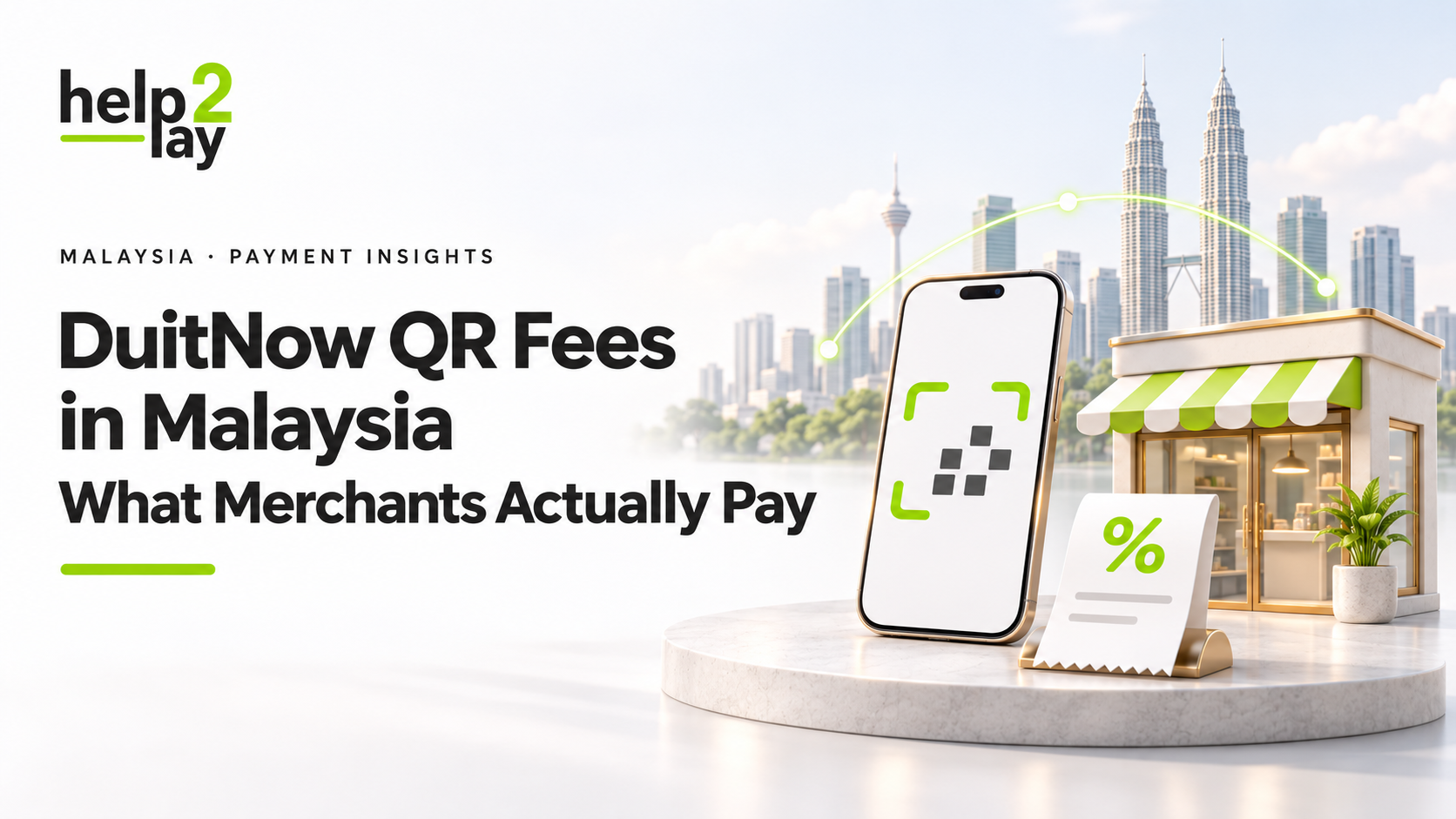
DuitNow QR Fees in Malaysia: What Merchants Actually Pay
Key Takeaways
- Malaysia’s Ministry of Finance rejected a viral claim that new QR payment service charges would begin on 1 November 2026.
- PayNet says DuitNow QR payments are free for consumers. Merchants may pay an MDR set by their acquirer.
- An acquirer’s MDR and a payment provider’s bundled service quotation may cover different things.
- Compare the full cost, eligibility and settlement conditions, not just the advertised percentage.
A free payment for the customer can still carry a cost for the merchant. Here is how to separate the headline from the terms in your quotation.
What the November fee story actually said
On 18 October 2026, Malaysia’s Ministry of Finance dismissed a viral poster claiming that QR payment service charges would be introduced on 1 November. The ministry said no official announcement had been made as the poster claimed. Read the MOF clarification.
For merchants, the useful distinction is between that false claim and the commercial terms already attached to their payment service. The clarification should not be read as a promise that every merchant’s QR acceptance arrangement is free.
Consumer payments and merchant fees are different
PayNet’s fee guidance states that DuitNow QR payments are free for consumers. It also says merchants may pay a Merchant Discount Rate, or MDR: a percentage of the amount paid by the customer, subject to the rate set by the merchant acquirer.
The customer’s payment experience and the merchant’s acceptance cost therefore need to be considered separately. To understand what your business pays, start with the agreement and fee schedule for your own account.
Read the quotation in three parts
1. Payment acceptance
Identify the exact service and transaction type covered by the rate. Is it a direct DuitNow QR acquiring arrangement, or a broader payment gateway package? Does the offer apply to your business category, payment flow and expected transaction size?
Ask whether the quotation is percentage-only, includes a fixed charge, or applies a minimum fee. If a waiver is offered, confirm its eligibility rules, expiry date and the price that follows it.
2. Services around the payment
Ask what the quoted rate includes: integration, reporting, reconciliation, support or other services. Establish which items are billed separately and whether any tax applies. These are questions to check with the provider, not charges that necessarily apply to every DuitNow QR merchant.
Compare equivalent packages. A standalone acceptance rate and a bundled gateway quotation are not useful comparisons until the scope of each is clear.
3. Settlement and access to funds
Confirm when proceeds become available, in which currency, and to which account. Ask about cut-off times, weekends, public holidays, minimum settlement amounts and any settlement or withdrawal charge. If conversion is required, check the exchange-rate basis and any separate fee.
The amount deducted and the time spent waiting both matter to cash planning. Have any reserve, hold or delayed-release conditions explained in writing before launch.
A simple way to check the numbers
Suppose a purely illustrative quotation charges 1% on an RM100 payment, with no fixed or minimum fee. The acceptance fee would be RM1, leaving RM99 before any other applicable deductions. This is a calculation example, not a Help2Pay offer or a market rate.
For a realistic comparison, give each provider the same monthly volume and transaction-size mix. Request an itemised estimate showing acceptance fees, other service charges and the expected net proceeds. Keep refundable reserves or held balances separate from fees: they affect cash availability but are not automatically a permanent cost.
Then test a sample of live transactions against that estimate. Match the amount paid by the customer, the processing deduction and the amount credited to the destination account. Investigate differences rather than relying only on a dashboard percentage.
Five questions to send your provider
- Which payment flow, business categories and transaction limits does this rate cover?
- What percentage, fixed or minimum charges apply, and are taxes included?
- Which services are included, and what could be billed separately?
- When will funds reach our account, and what settlement, conversion or hold conditions apply?
- If this is a promotional rate, when does it end and how are later changes communicated?
The most useful answer is a written schedule that your finance and operations teams can reconcile against actual transactions. A headline about QR fees cannot replace that.
Reviewing your Malaysia payment setup?
Talk to Help2Pay about your payment methods, expected volumes and settlement requirements. Explore our coverage or contact our team to discuss the available options for your business.
Frequently asked questions
Did Malaysia announce a new blanket QR payment charge for 1 November 2026?
No. MOF’s 18 October clarification rejected the viral claim. It does not replace the commercial fee schedule agreed between a merchant and its provider.
Is DuitNow QR free for merchants?
Not necessarily. PayNet distinguishes free consumer payments from a possible merchant MDR set by the acquirer. Check the terms applying to your account.
Is MDR the same as my total payment cost?
Not always. Establish what is included in the quotation and whether separate service, settlement, conversion or other charges apply. Do not assume that every provider charges each of these.
What should I compare before choosing a provider?
Use the same transaction volumes and ticket sizes to compare total fees, eligibility, limits, services and access to funds. Ask for the full written schedule and verify it against sample transactions.