Resources & Insights · Regional
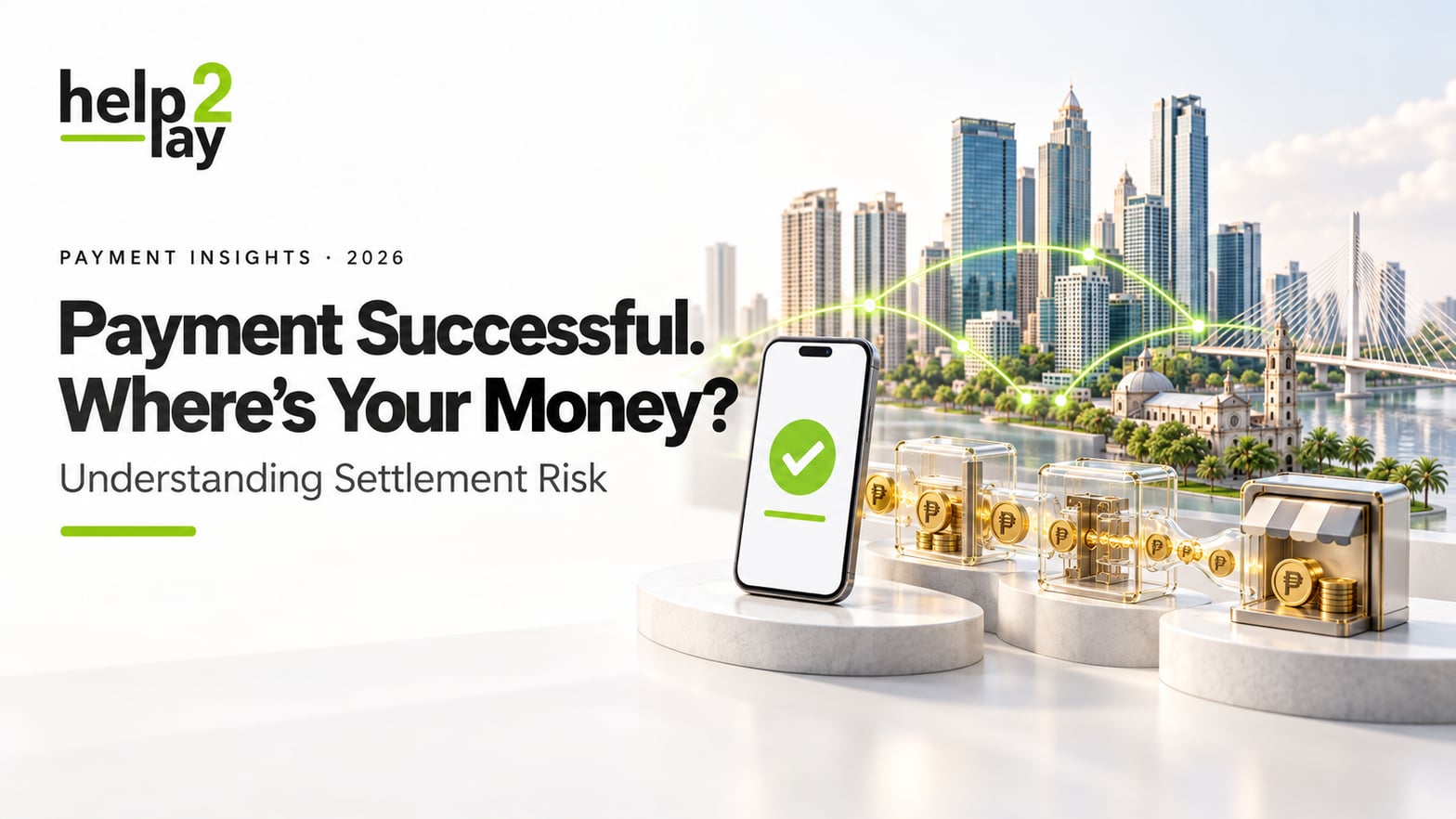
Your Payment Was Successful. So Where’s Your Money?
Key Takeaways
- “Successful”, available balance and settlement can describe different stages of the same transaction. Ask your provider what each label means.
- Settlement between institutions and funds being usable by the merchant are separate questions. That isn’t automatically a problem, but someone must be able to explain it when a payout is late.
- A lower processing fee can come with a longer wait for payout. Compare payout timing, custody, reserves and liability alongside price.
- Before signing, ask who holds the funds, who owes you settlement, what happens upstream, what makes instant payouts possible and what recourse you have.
- Test the promise in operation: reconcile sample transactions from payment to bank credit, and track overdue amounts by age and payment route.
A successful checkout is only part of the story. Merchants need to know when funds become usable, who holds them and who is accountable along the way.
A customer pays, the checkout shows a successful transaction, and your team releases the order. For sales operations, the job looks finished. For treasury, one question remains: when can the business use the money?
That question belongs in the provider selection process, alongside conversion rates, payment coverage and fees. A payment notification, a balance in a dashboard and money available in a merchant’s bank account can describe different stages of the same transaction.
For merchants and payment operators working across Asian markets, the practical task is to understand the route from acceptance to usable funds. Start with the status labels. Then follow the money and the responsibility.
Three milestones worth separating
Payment status tells you what the provider has confirmed. Depending on the payment method and integration, “successful” may refer to a particular processing event. Ask for the exact definition rather than assuming the label means cash has arrived in your bank.
Available balance tells you what you can use or withdraw under the provider’s rules. Check whether the figure includes pending amounts, whether reserves are deducted and whether a withdrawal still requires a separate payout step.
Settlement concerns the discharge of payment obligations. Crucially, settlement between financial institutions and the availability of funds to a merchant are different questions. The Bank of England’s explanation of net settlement shows how customer funds can be available before the resulting obligations between participating institutions are finally settled.
That separation is not automatically a problem. A well-designed payment service can give merchants timely access to money while managing the underlying settlement process. The concern is an arrangement nobody can explain clearly when a payout is late.
The Philippines offers a useful regional example. In its FAQ on merchant payment acceptance, the Bangko Sentral ng Pilipinas explicitly distinguishes posting consumer payments from making funds available to merchants under their agreements. It also identifies delayed receipt of funds and inadequate recourse as merchant risks. This is a Philippine framework, not a single rule for Asia.
A low fee does not describe the whole deal
Consider a hypothetical merchant comparing two otherwise similar offers. One saves 0.2 percentage points in processing fees but leaves an additional day’s receipts awaiting payout. On daily sales of US$100,000, the fee saving is US$200 a day, while the additional amount awaiting payout is roughly US$100,000.
Those figures are not directly comparable costs. The outstanding amount is not automatically a loss, and a longer settlement cycle does not by itself make a provider unsafe. But the merchant still needs to fund inventory, payroll and other obligations while waiting. It also needs to understand its exposure if the expected payout does not arrive.
The commercial comparison should therefore include payout timing, custody arrangements, reserves and liability. A small fee advantage may be worthwhile. It should be a conscious trade-off, supported by the contract and operating model, rather than an accidental dependency discovered during a delay.
Five questions to ask before signing
1. Who holds the funds?
Ask for a funds-flow map naming the legal entities and account holders at each relevant stage. Identify who controls payout instructions and what protections apply to money awaiting transfer. A provider’s brand name alone does not explain custody. Request evidence for claims about segregation or safeguarding, and have the relevant terms reviewed for the markets involved.
2. Who owes the merchant settlement?
Identify the legal entity responsible for paying you, not just the company providing the dashboard. Confirm the payout currency, destination, cut-off time, business-day calendar and permitted deductions. Ask whether its obligation depends on receiving money from another party, and where that dependency appears in the agreement.
3. What happens when an upstream party freezes or delays funds?
Ask who investigates, who communicates with you and what happens to the payout obligation. Establish the escalation route, information you will receive and treatment of affected balances. A useful answer explains responsibilities and contractual limits. “We will chase our partner” is an activity, not a complete resolution process.
4. What makes an instant payout possible?
Ask what “instant” or “T+0” measures: a dashboard credit, an initiated payout or usable money in the destination account. Faster merchant access may rely on the payment rail itself, provider liquidity, prefunding or another arrangement. Do not assume every same-day payout is prefunded. If liquidity is advanced, understand its limits, conditions and what happens when those limits are reached.
5. What recourse exists if the money does not arrive?
Review the claims process, evidence requirements, escalation contacts and contractual remedies. Check how the agreement deals with suspension, default and termination, including release of remaining balances. These provisions deserve qualified review in the relevant jurisdiction. A support channel helps during an incident; it does not replace a clear obligation to pay.
Test the promise in daily operations
Multiple partners can serve legitimate purposes, including local payment access and operational support. The number of layers alone does not establish whether an arrangement is sound. Equally, a direct connection is not a guarantee against delay or loss. Look for clear responsibilities, appropriate controls and evidence that the service performs as agreed.
During onboarding, reconcile a sample of transactions from the payment event through the provider’s report to the credit in your bank account. Record actual elapsed time, fees and deductions. Track overdue amounts by age and payment route, rather than relying on one aggregate balance. Repeat the checks when routes, counterparties or contractual terms change.
A successful payment is an important milestone. For a merchant, the commercial outcome also depends on predictable access to funds and a clear path to resolution when something goes wrong.
Don’t stop at asking whether a payment worked. Ask when the money becomes yours, and who is accountable until it does.
Bring these five questions to us.
Walk through how funds move from payment to your account in each market with our team — straight answers on timing, custody and recourse.
Frequently asked questions
Does a “successful” payment mean the money is in my bank account?
Not necessarily. Depending on the payment method and integration, “successful” may refer to one particular processing event. A payment notification, a dashboard balance and money in your bank account can be different stages of the same transaction. Ask your provider for the exact definition.
What is the difference between settlement and funds availability?
Settlement concerns paying off the obligations between financial institutions. Availability is when the merchant can use the money. Funds can be available before those obligations are finally settled. That is not a problem in itself, but the arrangement should be clear.
Is a lower processing fee always the better deal?
Not by itself. In a hypothetical example, saving 0.2 percentage points on US$100,000 of daily sales is US$200 a day. But if it adds a day’s wait for payout, roughly US$100,000 more is outstanding. The two figures aren’t directly comparable, so the choice should be a conscious trade-off.
Does an “instant” or T+0 payout mean the provider prefunds it?
Not necessarily. Ask whether “instant” means a dashboard credit, a payout that has been started, or usable money in your account. Faster access may rely on the payment rail itself, provider liquidity, prefunding or another arrangement.
Does the BSP example apply across Asia?
No. The Bangko Sentral ng Pilipinas FAQ is a Philippine framework, used as a regional example, not a single rule for Asia.